Dog Door Installed Through Exterior Stucco Wall in St. George
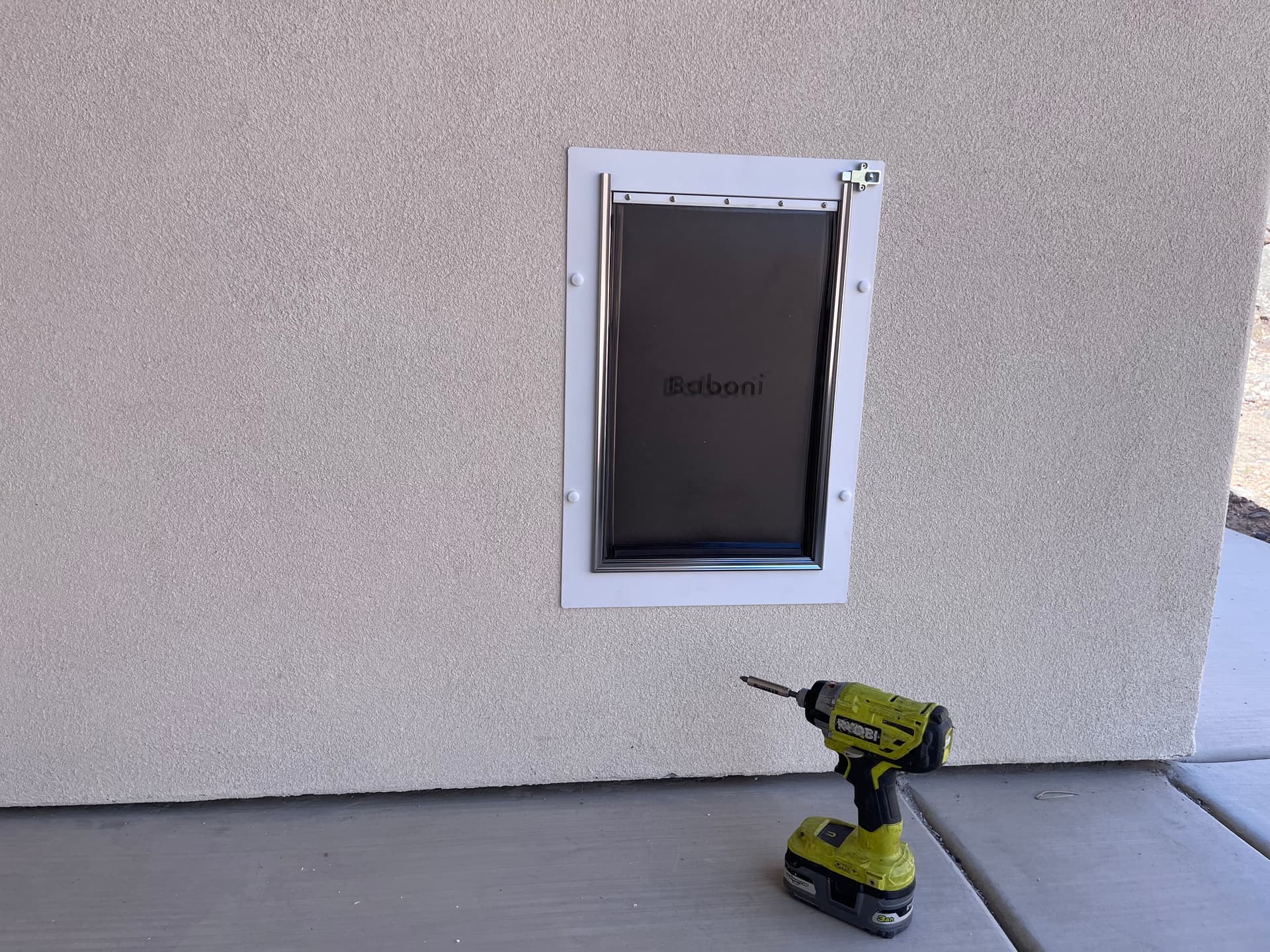
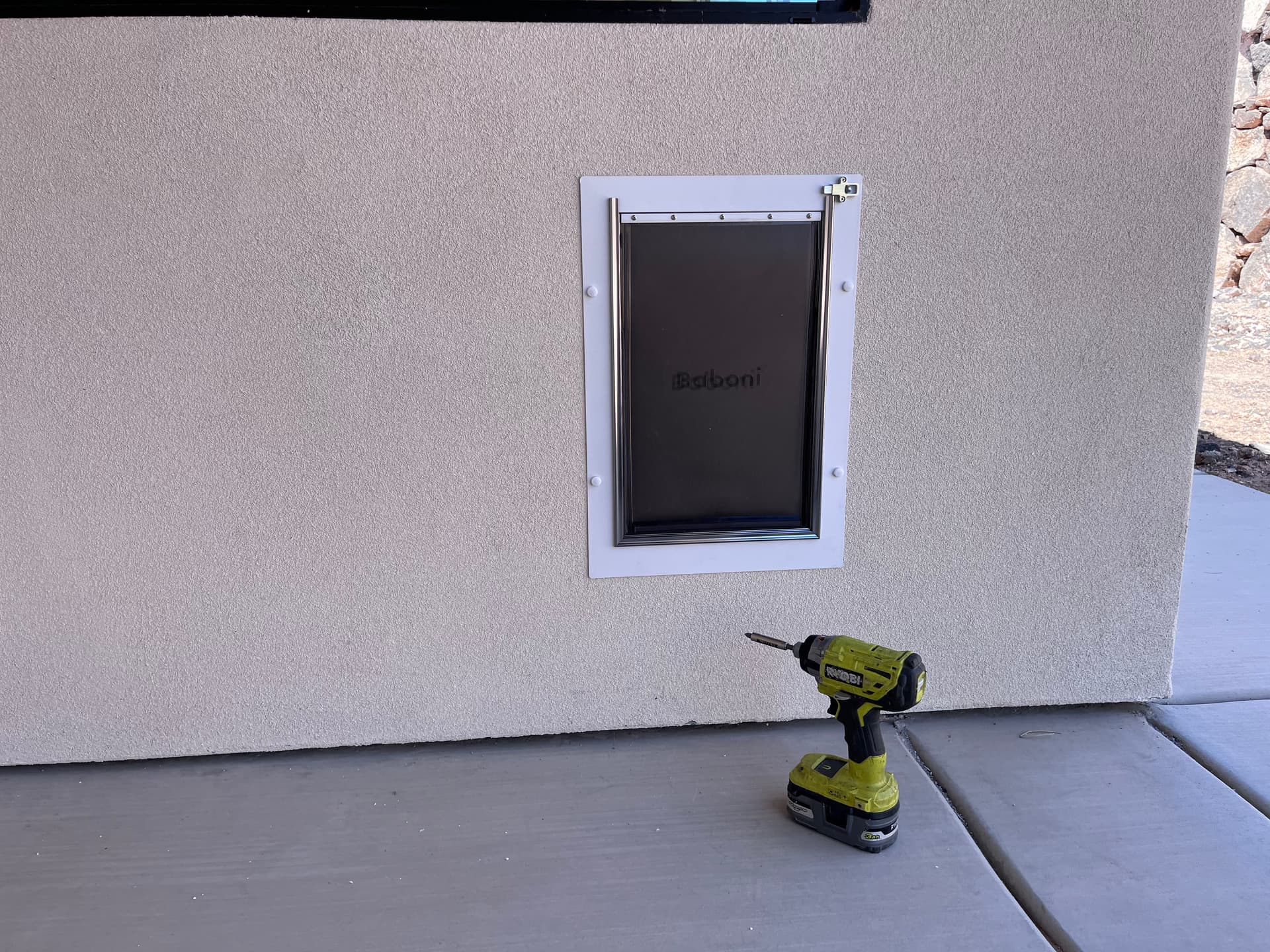
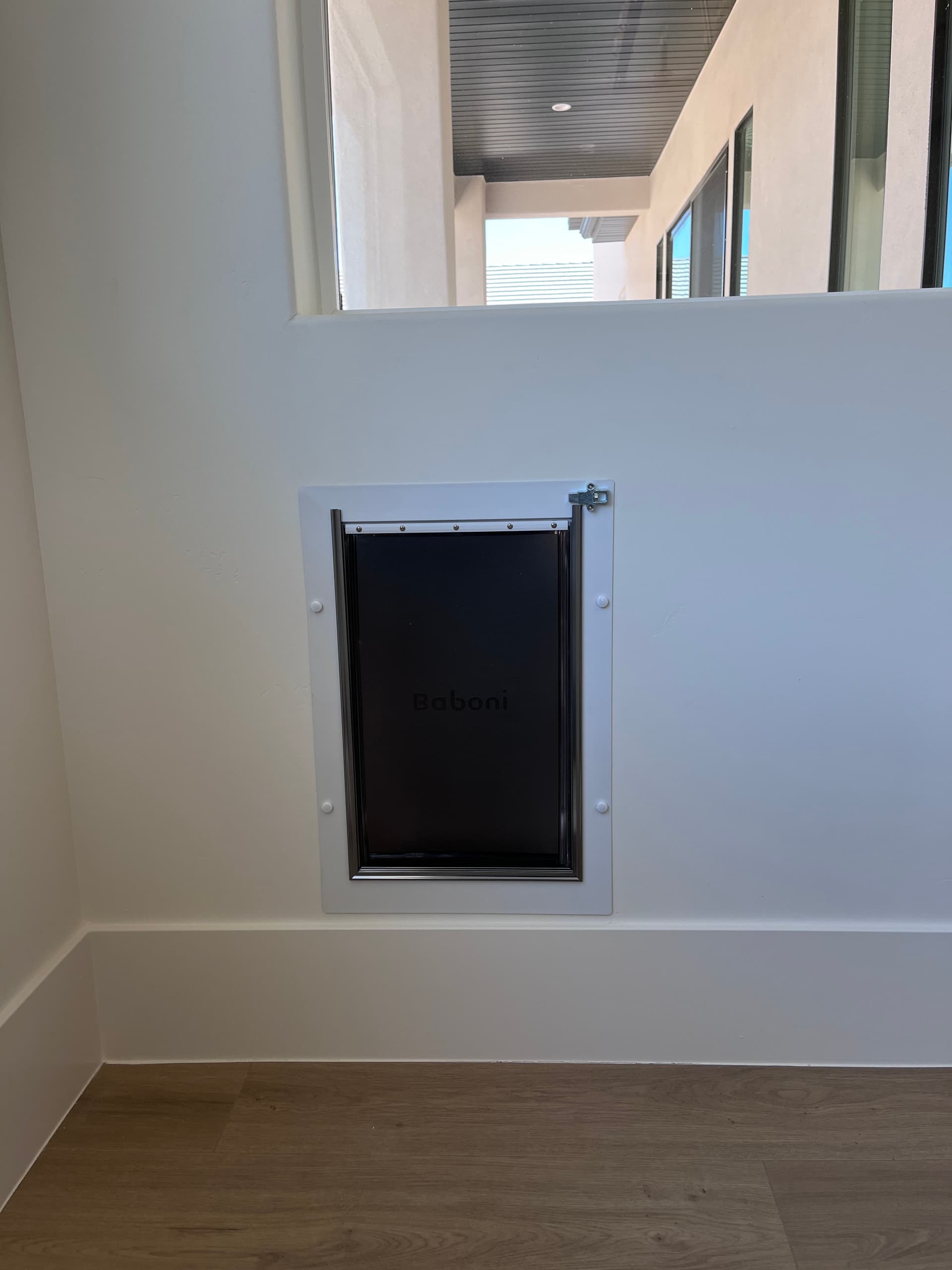
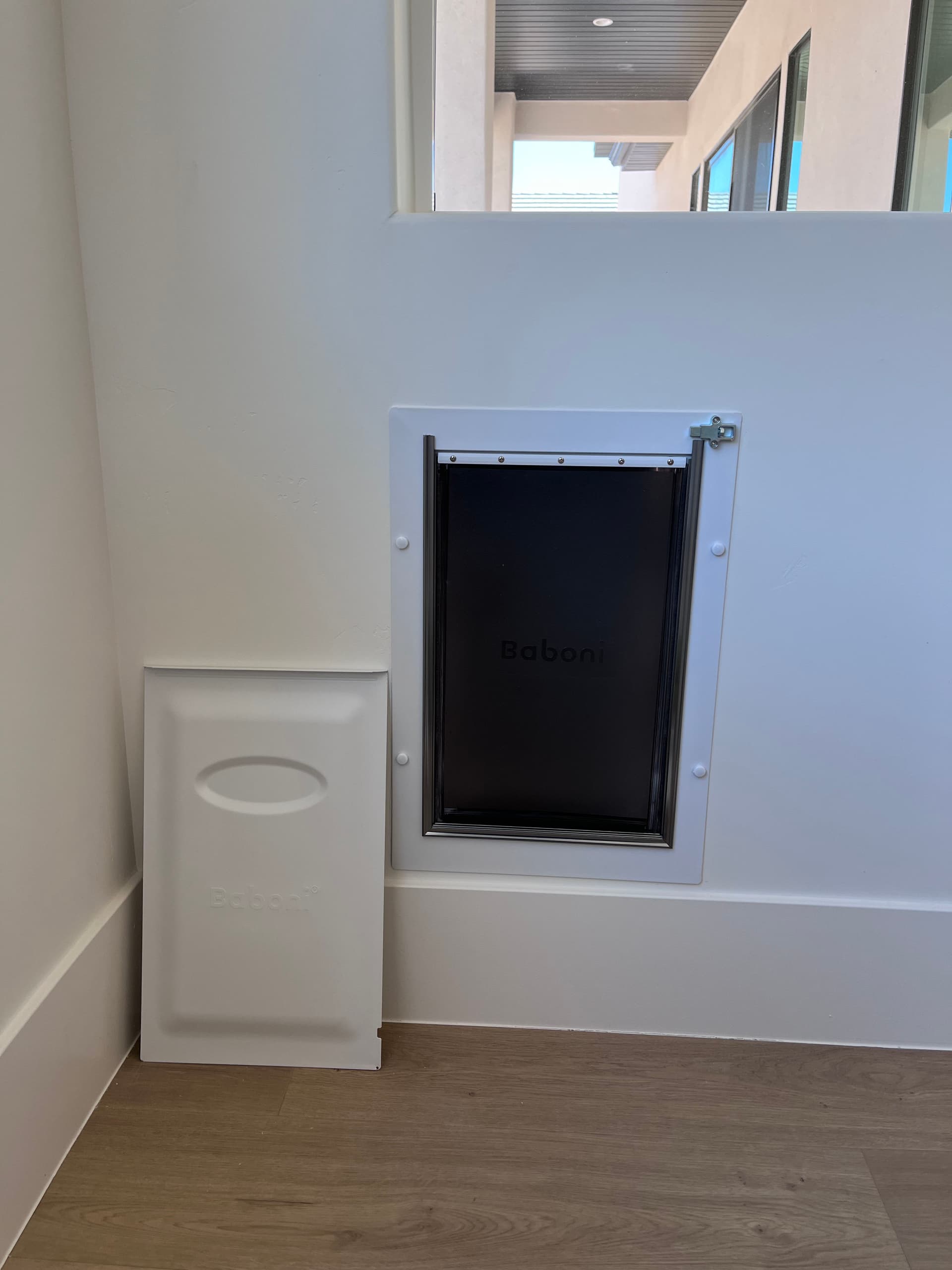
Cutting a dog door into an exterior wall is one of those jobs that looks simple on the surface but has a lot of room to go sideways. You're working through stucco, sheathing, insulation, and drywall - all at once. Get the layout wrong or skip the right steps, and you end up with a gap that leaks air, collects water, or just looks rough. That's exactly why precision at the start matters so much.
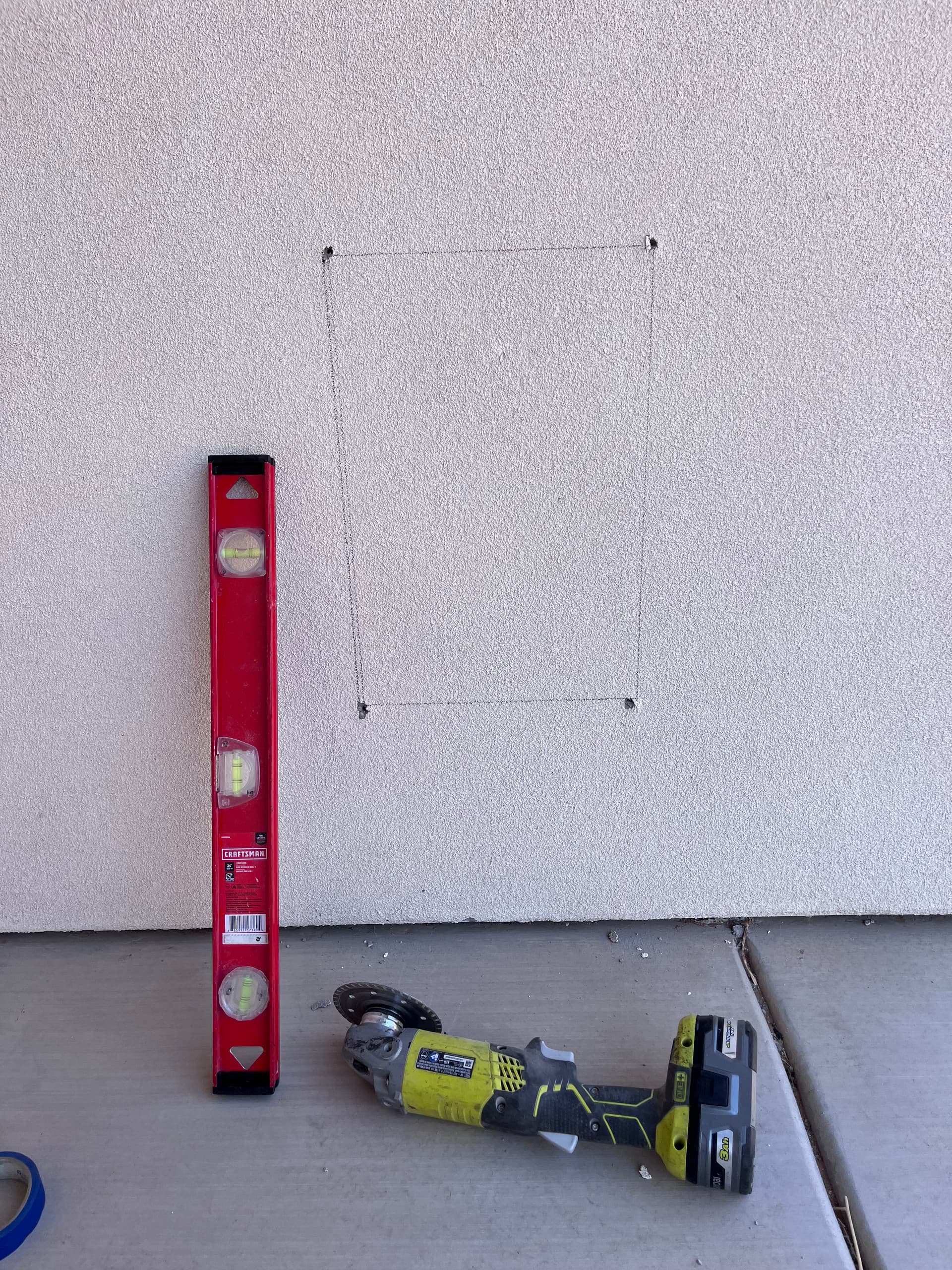
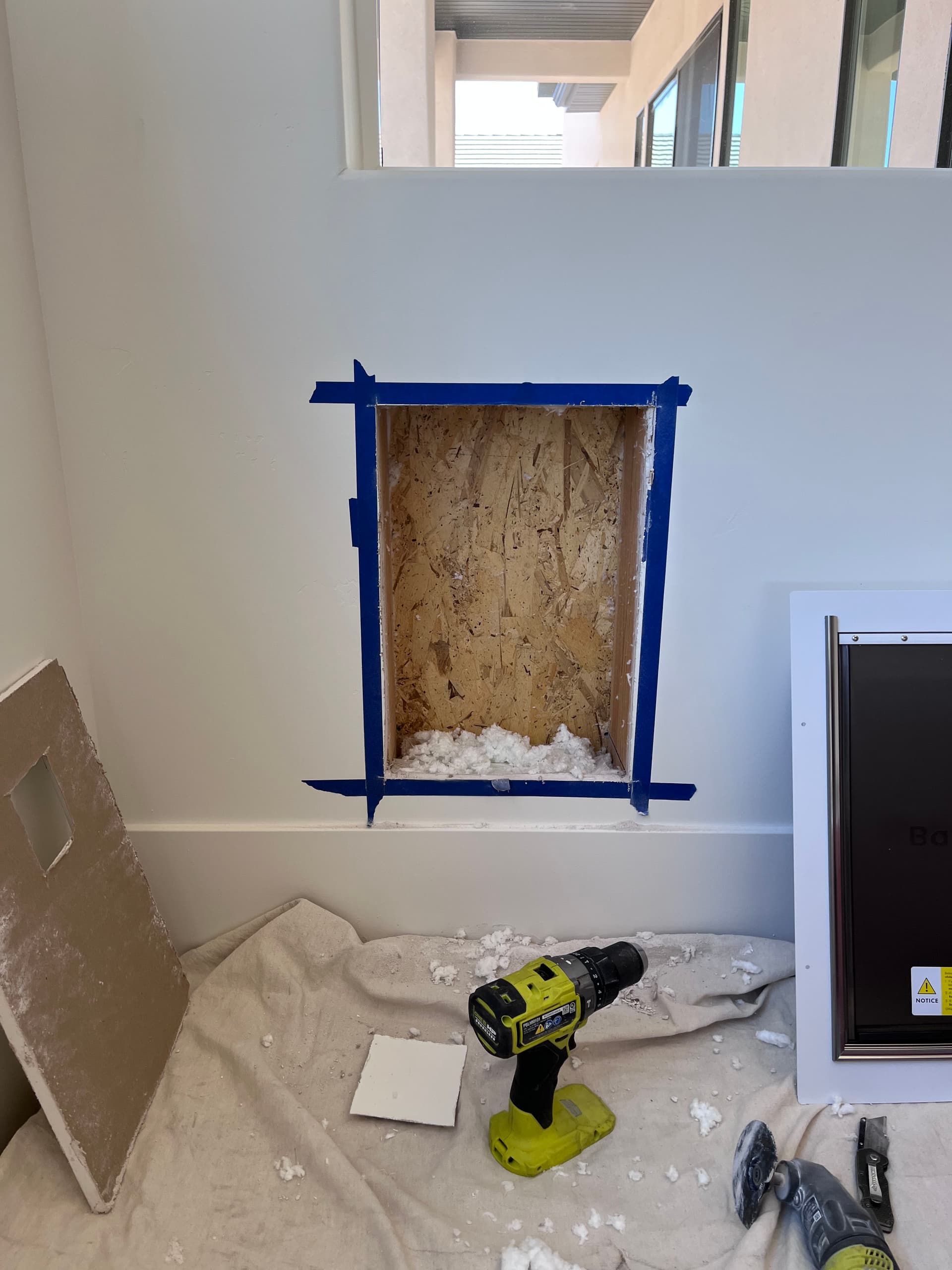
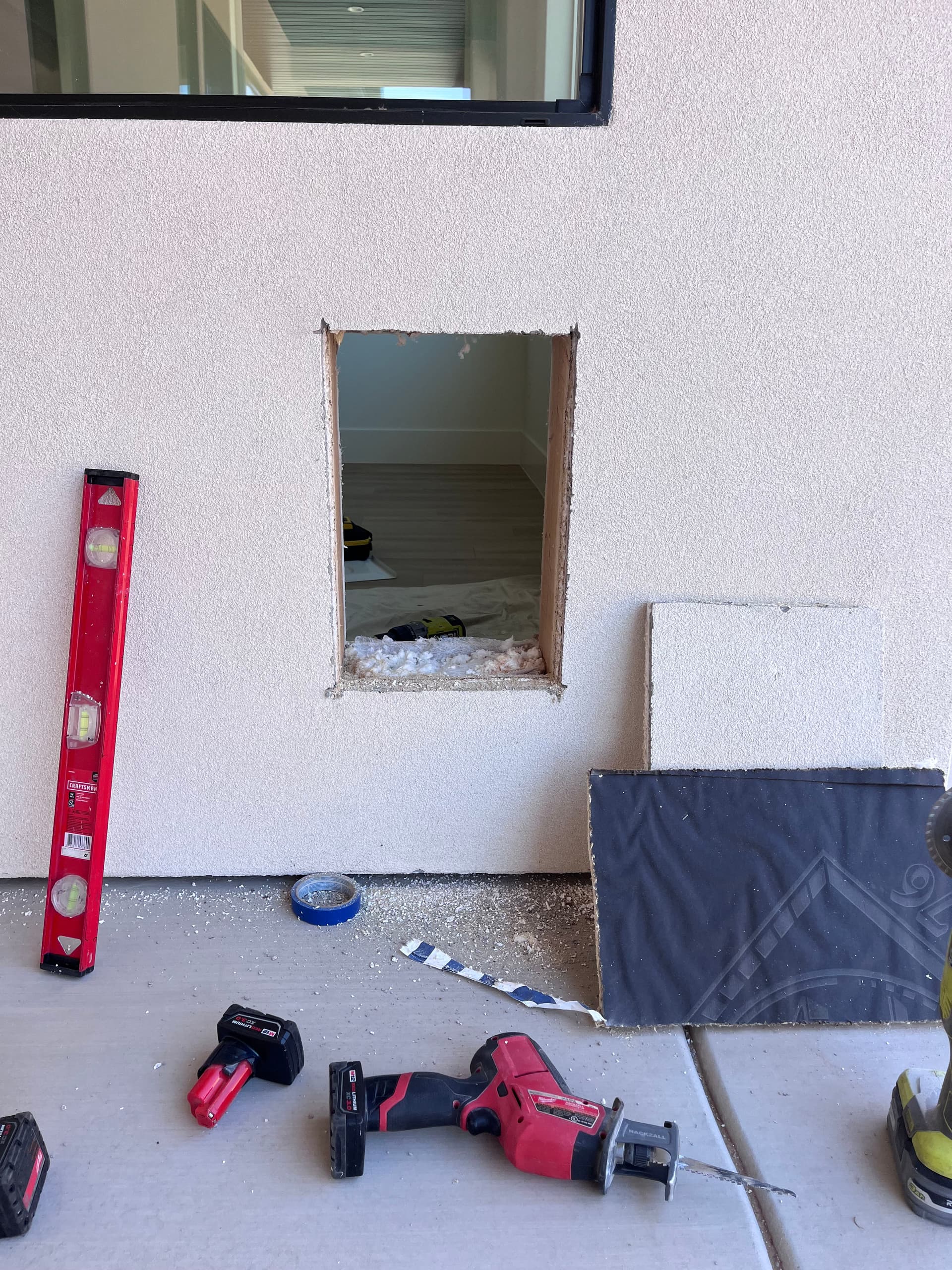
We started by laying out the cut with a level and marking the opening directly on the stucco wall. Getting the lines square and plumb before any cutting begins is what separates a clean result from a sloppy one. Once we had the exterior opening cut and the wall tunnel cleared out, we taped off the interior drywall edges to protect the surrounding wall finish - a small detail that keeps the finish work clean on both sides.
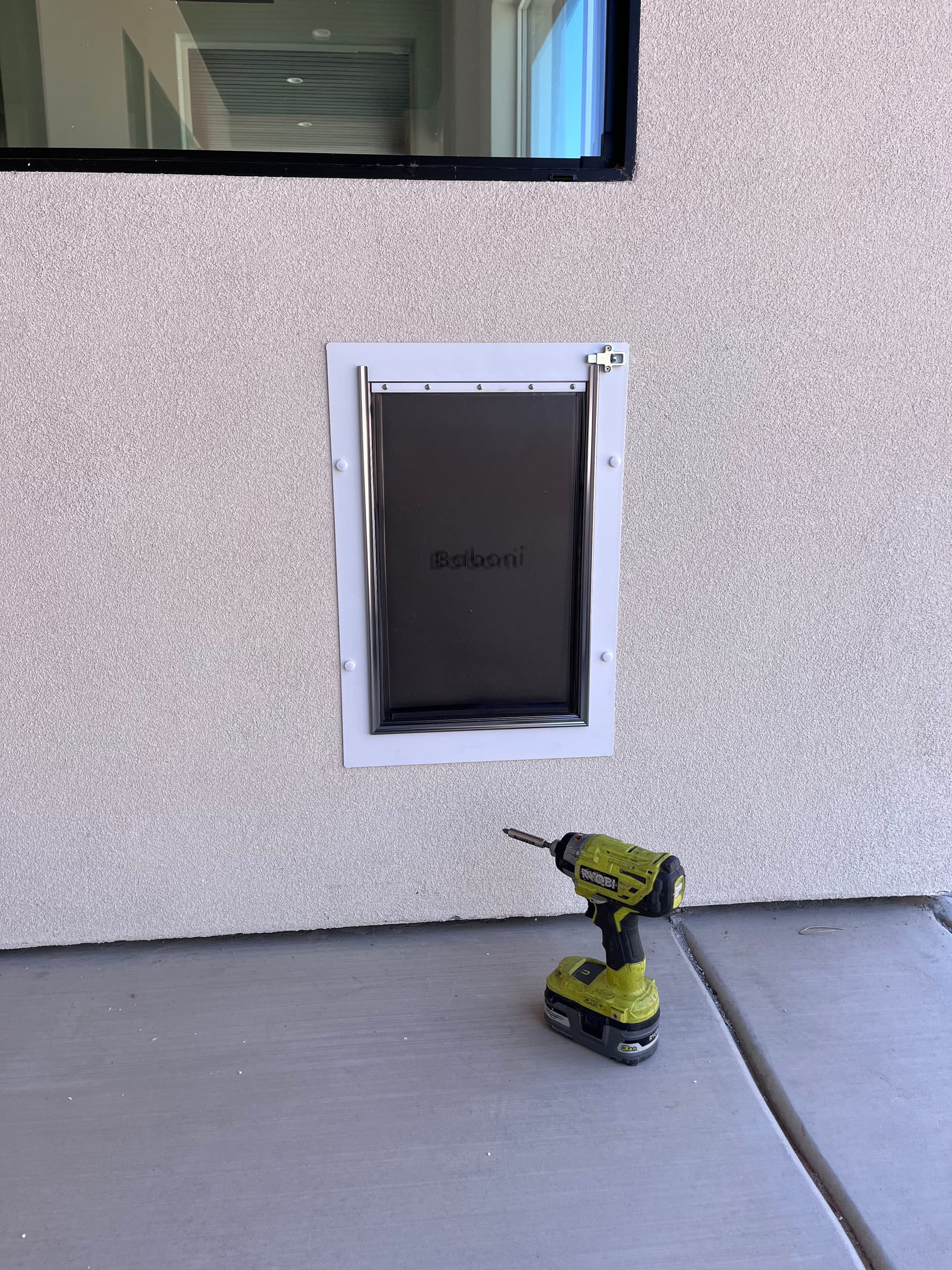
The unit we installed is a Baboni wall-mount pet door, which is a solid choice for through-wall applications. It's built with a tunnel frame that spans the full wall thickness, so there's no open gap or makeshift framing needed. The flap seals well, the frame sits flush against the stucco on the outside and the drywall on the inside, and the whole thing looks like it belongs there - not like an afterthought.
What makes a wall installation trickier than a door installation is that you're responsible for the entire tunnel, not just mounting a frame into an existing opening. The wall cavity has to be bridged cleanly, the frame has to be set level, and the exterior has to be sealed so weather can't work its way in around the edges. Done right, it holds up long-term and doesn't create any headaches down the road.
If you've got a dog door sitting in a box somewhere or a home project you've been putting off because it feels too involved - that's exactly what we're here for. Jobs like this are quick for us and make a real difference in day-to-day life for you and your dog.